

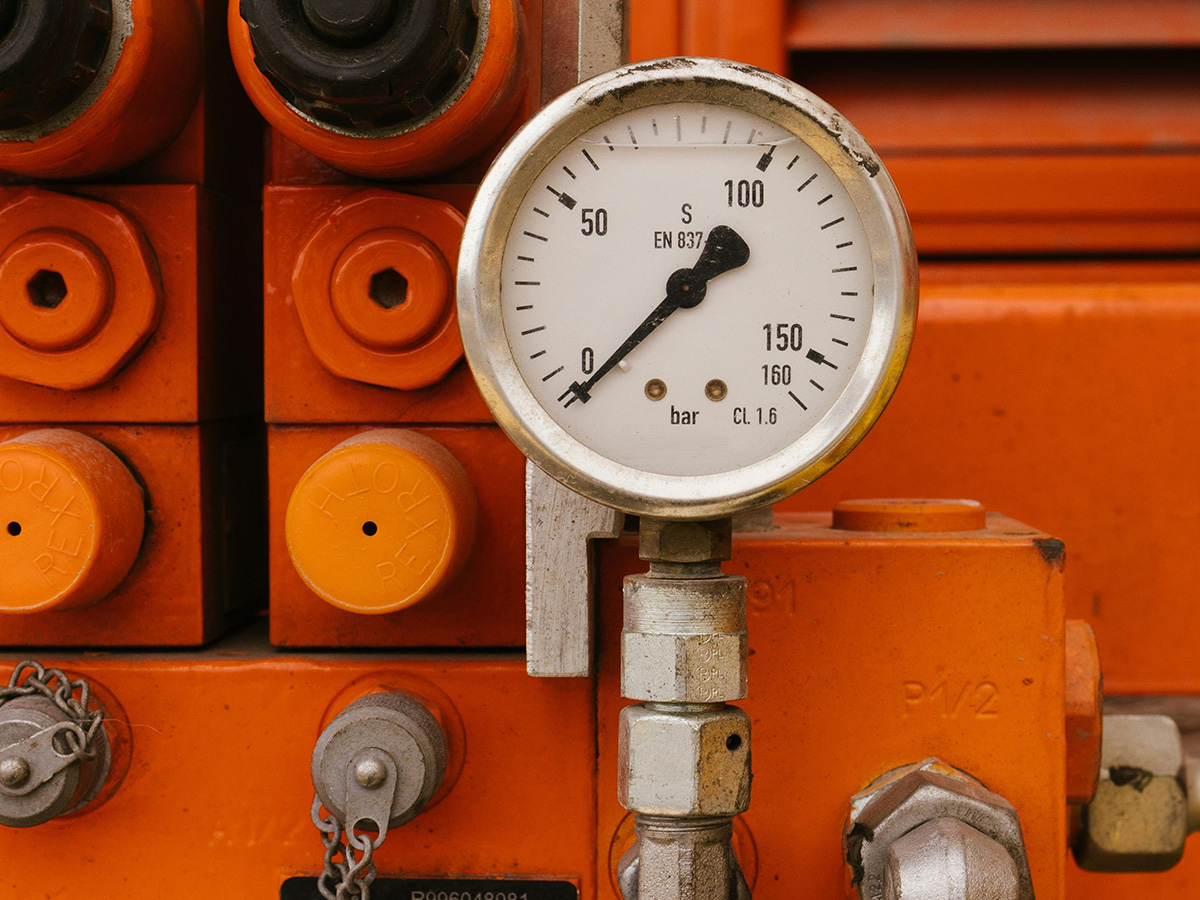
In many industrial plants, the water hammerthe pressure pulses and the high-frequency vibrations are phenomena that can compromise the reliability of a pressure gauge. These effects, mainly caused by pumps, compressors, quick-closing valves or sudden changes in flow rate, generate violent oscillations that damage measuring instruments. Faced with this critical need, ZAES launches new range of dampers for pressure gaugesspecifically developed to offer superior protection and ensure a stable reading even in adverse conditions.
This new launching consolidates ZAES as a reference in industrial instrumentationThe company offers robust, versatile components tailored to the real-world requirements of maintenance, process engineering and industrial operations professionals.
Why does water hammer occur and how does it affect a pressure gauge?
From the point of view of fluid mechanicsWater hammer occurs when a fluid in motion is forced to stop or change direction abruptly. This phenomenon generates a sudden increase in pressure that can be several times the nominal working pressure.
In practical terms, this leads to:
- More than 1,500 needle oscillations per minute in some processes.
- Mechanical fatigue of the Bourdon tube.
- Breakage of the internal mechanism of the pressure gauge.
- Inaccurate or illegible readings.
- Risk of leaks or unforeseen failures.
The keystrokesAlthough less violent than water hammer, they also cause accelerated wear, especially in piston pumps, hydraulic systems or compressors.
An unprotected pressure gauge is exposed to repeated pressure cycling, which drastically shortens its service life.
This is where the ZAES pressure gauge dampers provide crucial value.
ZAES pressure gauge shock absorbers: advanced design for maximum stability
The new ZAES shock absorbers - also known in the sector as gauge snubbers- incorporate internal elements designed to regulating the flow of fluidThe pressure gauge does not suffer from the direct transmission of pulsations.
Technical highlights
- Calibrated restraint system
The heart of the ZAES shock absorber consists of a precise restriction which filters the fluid according to the needs of the process:
- eliminates high-frequency vibrations,
- smoothes out pressure peaks,
- stabilises the pressure gauge needle.
This hydraulic filter converts an unstable pressure wave into a smooth, linear signal.
- Carbon steel or stainless steel construction
Available in:
- Stainless steel AISI 316suitable for steam, chemicals, food and corrosive gases.
- Carbon steelideal for hydraulic systems, compressed air and standard processes.
Both variants ensure a long service life even in aggressive environments.
- BSP and NPT connections for international compatibility
ZAES has designed these dampers with integration with any industrial installation in mind.
Available in:
- BSP (G) - European standard
- NPT - American standard
An important advantage for plants with mixed equipment or international spare parts.
- Wide range of working pressures
ZAES shock absorbers can work in:
- low pressure systems,
- installations of up to 400 bar,
- steam lines,
- pulsating or cyclical processes.
Their versatility makes them suitable for multiple sectors.
- Compact design and easy installation
It only needs to be threaded between the pressure gauge and the process line, without adapters or special tools.
This reduces installation time and avoids common assembly errors.
Operational benefits: more stable measurements and longer instrument lifetime
The most notable improvement is the pressure gauge needle stability.
By filtering the keystrokes, the reading becomes:
- clear,
- firm,
- precise,
- stable.
What does this mean for maintenance?
- The pressure gauge wears much less.
- Revisions and replacements are spaced out.
- The installation works more safely.
- Unexpected leakage due to mechanical fatigue is reduced.
In many cases, the installation of shock absorbers extends the life of the pressure gauge between 3 and 6 timesdepending on the process.
Ideal applications of ZAES shock absorbers
These devices are particularly recommended for processes with rapid pulsations or fluctuationssuch as:
- High pressure hydraulic circuits
Presses, industrial machinery and hydraulic systems often have intense pulsations generated by piston pumps.
- Compressed air systems
Compressors generate repetitive cycles that damage the measurement.
- Alternative pumps
Any diaphragm or piston pump produces pulsations that require damping.
- Steam networks
Although the siphon protects from heat, the damper reduces peaks in the steam transmission.
- Chemical and petrochemical processes
Where pressure peaks are frequent and measurement stability is critical.
ZAES versus other traditional solutions
ZAES shock absorbers outperform many alternatives on the market due to:
- its precise calibration,
- its robust construction,
- their BSP/NPT compatibility,
- its competitive price,
- their immediate availability,
- and its easy integration with siphons and valves of the same brand.
While many generic devices only partially reduce vibrations, ZAES dampers have been optimised to work in real industrial systems where conditions are more severe.
Seamless integration with other ZAES accessories
To maximise the life of the gauge, ZAES recommends using the gauge as a set:
- Pressure dampers
- Siphon tubes (if steam is present)
- Valves for pressure gauges (for purging and maintenance)
This combination creates a complete instrumentation ecosystem capable of extending the life of the pressure gauge for years.
In short: a step forward in instrument protection.
The new ZAES pressure gauge dampers offer a reliable, cost-effective and highly efficient solution to combat water hammer and pulsation in process lines.
Its benefits:
- Greater precision
- Less wear and tear
- Reduction of breakdowns
- Less maintenance
- Increased security
- Global compatibility
A small accessory with a huge impact on system reliability.



 English (UK)
  Español
  Español de Chile
  Español de México
  Español de Argentina
  Español de Colombia
  Español de Costa Rica
  Español de Ecuador
  Español de Perú
  Español de República Dominicana
  Español de Uruguay